Costa Rica, a nation celebrated for its breathtaking natural beauty, expansive rainforests also harbors a rich yet underappreciated numismatic heritage. For collectors seeking to explore less-traveled paths, Costa Rican coins offer a compelling venture.
The early 20th-century Costa Rica colones and centavos silver coins offer a glimpse into the economic and political landscape of the Central American country during that era.
Central American Republic Silver Coins (1824-1851)
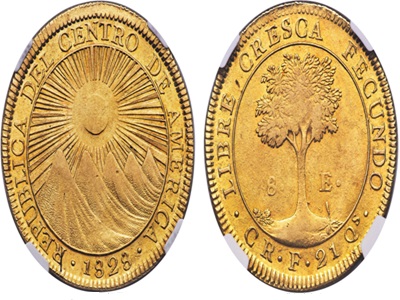
Originally part of the Central American Republic (CAR) from 1823 to 1839, Costa Rica’s early coinage was produced under a union that included present-day Guatemala, Honduras, Nicaragua, and El Salvador. The coinage from this period predominantly featured the emblematic motif of a radiant sun overseeing three or five mountains, symbolizing the nation’s sovereignty and natural splendor. The CAR’s silver coins, including the 1/4 real, 1/2 real, real, and 2 reales, were minted sporadically between 1824 and 1851, reflecting the economic and political fluctuations of the era.
These coins were primarily minted in San José, Costa Rica. Unlike many modern coins, early Costa Rican coins rarely bore explicit mint marks. Instead, collectors identify these coins through their design elements and KM (Krause-Mishler) catalog numbers, which are essential for accurate classification and valuation.

Example Values
Silver coins from the CAR era vary significantly in value based on rarity and condition. For instance:
- 1/4 Real Silver Coin: In fine condition, these coins can range from $50 to $150.
- 1/2 Real Silver Coin: Particularly scarce issues, such as the Republic Counterstamped 1/2 Real ND (1841-1842) with a radiant six-pointed star countermark, can fetch upwards of $1,700 in excellent condition (e.g., KM69).
- Real and 2 Reales Silver Coins: These are rarer, with values escalating to $200 – $800 depending on specific varieties and preservation.
Design Characteristics
The obverse typically showcases the National Coat of Arms, incorporating the Hymenocallis flower and laurel branches, while the reverse features a lone tree and the denomination in block lettering. Over time, variations include the introduction of five mountains and diverse counterstamps, adding layers of complexity and desirability for collectors.
Central American Republic Gold Escudos (1824-1850)
The gold escudo series represents a significant facet of Costa Rica’s numismatic history. Introduced in 1824, the 1/2 escudo and larger escudo denominations were minted with meticulous craftsmanship, paralleling the U.S. gold $1 coins of the mid-19th century in size and gold content. The series experienced intermittent production, with notable years being 1828, 1835, 1843, and the exceptionally rare 1850 issue.
Gold escudos were exclusively minted in San José, Costa Rica. Similar to the silver series, these coins lack explicit mint marks, necessitating reliance on design features and KM catalog numbers for identification.
Gold escudos possess both intrinsic metal value and significant numismatic appeal:
- 1/2 Escudo Gold Coin: The 1843 issue, with a mintage of merely 593, is a cornerstone of the series, valued around $12,000 for AU specimens as recorded in October 2008 auctions.
- 2 Escudos Gold Coin: Mintages range from 2,750 to 7,432, with values typically between $400 to $1,500 based on condition and specific dates.
- 8 Escudos Gold Coin: Struck in five different years starting from 1824, these coins are scarce and command prices upwards of $3,800 for exceptional examples.
In the early 1900s, Costa Rica adhered to the Latin Monetary Union (LMU) standards, ensuring that the Costa Rican colón maintained stability and was recognized internationally. The nation’s economy was heavily reliant on agriculture, particularly coffee and banana exports. The silver coins, denominated in colones and centavos, were integral to daily transactions and facilitating trade and economic growth.
Coins from the 20th feature prominent national symbols, such as the Hymenocallis flower and the National Coat of Arms. Collectors find Costa Rican coins appealing for their aesthetic value and ability to encapsulate a piece of Latin American history.
Counterstamped Coins: The Carrillo Star Series and Beyond
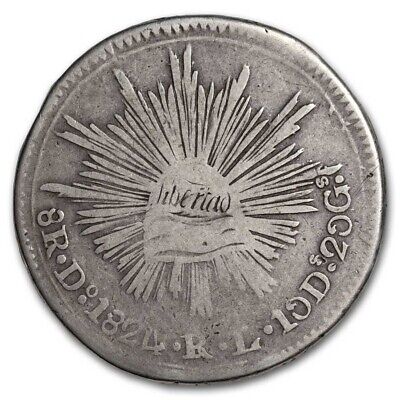
One of the most distinctive aspects of Costa Rica’s early coinage is the extensive use of counterstamps. Amidst the economic instability and coin shortages of the mid-19th century, Costa Rica employed counterstamping as a method to regulate and authenticate existing foreign coins, thereby expanding its monetary base without the need for extensive minting facilities.
Counterstamped coins were primarily processed in San José. The Carrillo star series, named after Head of State Braulio Carrillo, involved the application of a six-pointed star countermark on a variety of foreign coins, including Mexican 1 real, Peruvian 2 reales, Bolivian 4 reales, and others. These countermarks are identifiable through their distinct design—typically a radiant six-pointed star—and their placement on the host coin.
Transition to Peso and Centavo System (Post-1865)
In 1865, Costa Rica transitioned to a peso- and centavo-based monetary system, marking the end of counterstamped coinage. This shift facilitated the modernization of the country’s currency, aligning it with broader economic trends and enhancing its international trade capabilities.
Modern Costa Rican coins continued to be minted in San José, with some later issues produced by international mints, such as the Philadelphia Mint. These coins often bear explicit mint marks or are identifiable through their design and issuing authority.
While this period is beyond the early coinage focus, notable modern coins include:
- Gold 2 Colones (1916): Struck at the Philadelphia Mint, graded MS65, valued around $700.
- Gold 20 Colones (1899): Also produced in Philadelphia, graded MS62, with values ranging from $200 to $400 depending on specific details.
Modern coins often feature national icons and symbols, such as the depiction of Christopher Columbus on the gold 2 Colones or wildlife conservation themes in later commemorative issues. These designs reflect Costa Rica’s evolving national identity and priorities.
Republic Counterstamped 1/2 Real ND (1841-1842)
One of the most prized items in Costa Rican numismatics, the Republic Counterstamped 1/2 Real ND (1841-1842), is a rare holed coin featuring a Type I radiant six-pointed star countermark applied to a Mexican 1/2 Real from 1777. This particular specimen, labeled KM1, is highly sought after due to its rarity and historical significance, often fetching prices around $1,700.
Gold Escudo 1843
The Gold Escudo 1843 stands as a cornerstone of Costa Rican gold coinage, with a mintage of only 593. Classified as AU (About Uncirculated), this coin exemplifies the high craftsmanship and limited production of early Costa Rican gold coins. Recent auctions have seen similar specimens achieving prices upwards of $12,000, underscoring their desirability among collectors.
Modern Wildlife Conservation Series (1970-1987)
In the latter part of the 20th century, Costa Rica issued a series of wildlife conservation coins, including the 1500 Colones 1974 and 100 Colones 1982. These coins, minted in collaboration with international mints such as Italcambio and the Franklin Mint, combine intrinsic metal value with thematic artistry. For instance, the 1500 Colones 1974 Wildlife Conservation Series: Giant Anteater, graded NGC MS68, is valued between $1,500 to $3,100, depending on its condition and specific attributes.
1923 Costa Rica 50 Centavos Silver Coin
The 1923 Costa Rica 50 Centavos silver coin is a noteworthy piece for collectors. This coin is valued for its historical significance and its intricate design, which showcases Costa Rica’s national symbols. The obverse features the national coat of arms, while the reverse displays the denomination and year of minting.
Composed primarily of silver, the coin’s metallic content contributes to its intrinsic value. The coin’s diameter and weight are characteristic of early 20th-century minting standards, providing a tangible connection to the past. Coins in excellent condition, especially those with minimal wear and clear visibility of design details, are particularly sought after.
| Condition | Value (USD) |
|---|---|
| Good | $50 |
| Very Good | $100 |
| Fine | $150 |
| Very Fine | $300 |
| Uncirculated | $600 |

The highest recorded auction values for this coin can reach upwards of $600, particularly for specimens that have maintained their original luster and have been preserved in mint state conditions. Error coins, such as those with misprints or off-center strikes, can also command a premium due to their rarity and uniqueness.
1925 Costa Rica 1 Colon Silver Coin
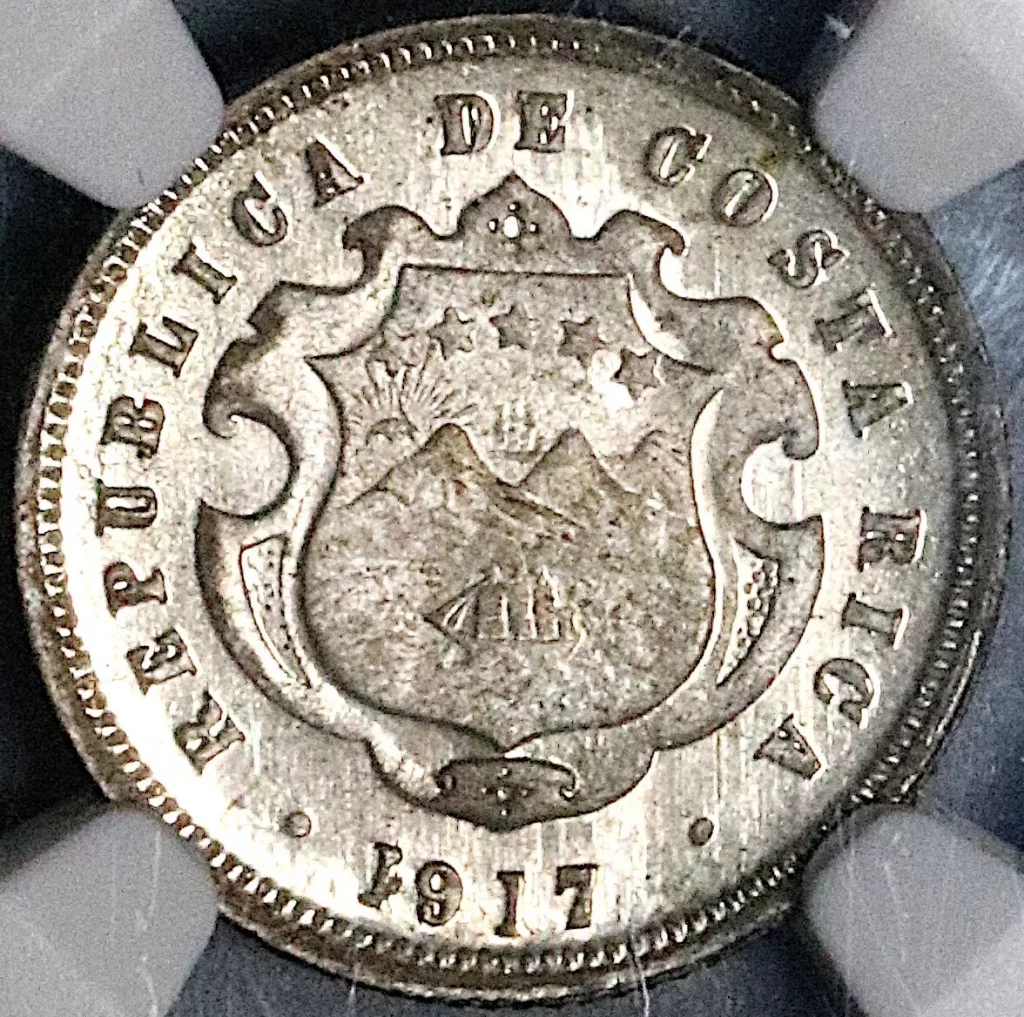
The 1925 Costa Rica 1 Colon silver coin is another prized item for numismatists. Known for its larger size and weight, this coin stands out with its bold design. The obverse again features the national coat of arms, symbolizing Costa Rica’s sovereignty, while the reverse is marked with the denomination and the mint year.
This coin’s composition is predominantly silver, contributing to its tangible value. The 1 Colon coin is a testament to Costa Rica’s economic conditions during the early 20th century. Collectors are particularly interested in coins that retain their original details and have not suffered from excessive circulation.
| Condition | Value (USD) |
|---|---|
| Good | $75 |
| Very Good | $150 |
| Fine | $200 |
| Very Fine | $400 |
| Uncirculated | $800 |
The 1925 1 Colon coin’s highest auction values can reach $800, especially for well-preserved examples. Proof coins, which are struck with greater detail and care for collectors, can be even more valuable. These coins are an excellent addition to any collection due to their historical significance and aesthetic appeal.
For collectors interested in expanding their numismatic portfolio with Costa Rican coins, understanding the historical context and condition of these coins is essential. They offer not only a glimpse into the past but also the potential for financial appreciation over time. As with all collectibles, the key to maximizing the value of Costa Rican coins lies in careful preservation and a thorough understanding of the market.