The coinage of 20th-century Germany reflects the nation’s tumultuous history, spanning multiple political systems, economic upheavals, and eventual reunification. From the German Empire to the adoption of the euro, Germany’s coins are historical markers of its political and economic evolution. This blog will examine Germany’s 20th-century coins, exploring their designs, significance, and collectability.
Pre-World War I German Coins (1871–1918)
Following German unification in 1871, the German Empire (Deutsches Kaiserreich) introduced a standardized currency system based on the gold mark. Coins from this period feature designs representing the empire’s federal structure, with individual states issuing their own coinage under imperial standards.
Key Coins
- Gold Coins: 5, 10, and 20 Mark coins struck with 90% gold, featuring portraits of the German Emperor or regional rulers.
- Silver Coins: Common denominations included the 1 Mark, 2 Mark, and 5 Mark coins, composed of 90% silver.
- Copper-Nickel Coins: Smaller denominations such as the 1 Pfennig, 2 Pfennig, and 10 Pfennig coins were made from base metals.
Designs
- Obverse: Featured portraits of German emperors, such as Wilhelm I and Wilhelm II, or the rulers of individual states like Bavaria or Prussia.
- Reverse: Displayed the imperial eagle, symbolizing German unity.
These coins were widely circulated until the outbreak of World War I in 1914 disrupted the German economy and monetary system.
Post-World War I German Coins (1918–1923)
The aftermath of World War I saw the German Empire’s collapse and the Weimar Republic’s establishment in 1919. Economic instability and hyperinflation characterized this period, leading to significant changes in coinage.
Key Changes
- Coins were primarily minted in aluminum and zinc due to the scarcity of precious metals.
- Hyperinflation rendered smaller denominations worthless, leading to the production of high-denomination banknotes.
Notable Coins
- Aluminum 1 Mark (1919–1922): Lightweight and inexpensive to produce.
- Zinc Pfennig Coins (1920–1923): Corroded quickly, reflecting the poor economic conditions of the time.
Coins from this era interest collectors as historical artifacts, though their material value is minimal.
Weimar Republic Coins (1923–1933)
In 1923, the Weimar Republic introduced a new monetary system, replacing the inflated Papiermark with the Rentenmark and the Reichsmark. This reform stabilized the economy and allowed for the reintroduction of higher-quality coinage.
Key Coins
- Silver Coins: 1 Reichsmark and 2 Reichsmark coins struck in 50% silver.
- Base Metal Coins: Aluminum-bronze coins for lower denominations, such as 1 Pfennig and 5 Pfennig.
Designs
- Obverse: Featured the Weimar Republic’s coat of arms or symbolic motifs like wheat sheaves.
- Reverse: Displayed the coin’s denomination and the year of issue.
The Weimar Republic’s coins are relatively common, though collectors seek rare dates and high-grade examples.
Rise of Hitler and Nazi Coins (1933–1945)
The rise of Adolf Hitler and the Nazi Party in 1933 led to significant changes in German coinage. Coins became tools of propaganda, featuring Nazi symbols and slogans.

Key Features
- Base Metal Composition: Precious metals were reserved for the war effort, leading to the use of zinc, aluminum, and iron.
- Nazi Symbols: Coins prominently displayed the swastika and eagle, representing the regime’s ideology.
Notable Coins
- 1 Reichspfennig to 50 Reichspfennig: Made from zinc or aluminum, often corroded due to poor material quality.
- 5 Reichsmark Silver Coin (1934–1939): Struck in 90% silver, featuring portraits of Paul von Hindenburg and Nazi symbols.
Nazi-era coins are controversial but remain of historical interest. Specific issues, such as rare mint marks or commemorative designs, command high premiums among collectors.
Post-World War II German Coins (1945–1948)
The country was divided into occupation zones following Germany’s defeat in World War II. Each zone issued its own currency under the supervision of Allied powers.
Key Features
- Coins were primarily made from aluminum and zinc due to post-war material shortages.
- Designs were simple and devoid of political symbols, reflecting the Allied effort to de-Nazify Germany.
Notable Coins
- Allied Military Coins: 1 Pfennig to 50 Pfennig coins issued for circulation in the American, British, and French zones.
- Rentenpfennig Coins: Issued in the Soviet zone, featuring agricultural motifs.
Post-war coins from this period often overshadow those from the subsequent East and West German administrations.
East German Coins (1949–1990)
The German Democratic Republic (East Germany) introduced its own currency, the East German Mark, in 1949. Coins reflected the state’s socialist ideals.
Key Coins
- Base Metal Coins: Common denominations included 1 Pfennig, 10 Pfennig, and 1 Mark, made from aluminum or aluminum-bronze.
- Commemorative Coins: Issued in silver and base metals to celebrate socialist achievements and anniversaries.
Designs
- It features socialist symbols representing industry and agriculture, such as the hammer and compass emblem.
East German coins are less widely collected but are enjoyable to those exploring Cold War numismatics.
West German Coins (1949–1990)
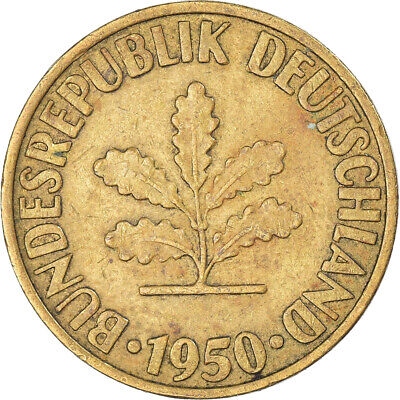
The Federal Republic of Germany (West Germany) adopted the Deutsche Mark as its currency in 1948, with coins introduced in 1949.
Key Features
- Coins were made from higher-quality metals, such as copper-nickel and silver.
- Designs emphasized Germany’s cultural and economic recovery.
Notable Coins
- 1 Deutsche Mark: A widely circulated coin symbolizing post-war prosperity.
- 5 Deutsche Mark Silver Coins (1951–1974): Struck in 62.5% silver, featuring cultural motifs and historical figures.
West German coins are highly collectible, with many commemorative issues celebrating milestones in German history.
Silver Coins from Germany
German silver coins hold particular appeal due to their intrinsic and historical value. Notable examples include:
- Pre-World War I Silver Coins: 2 Mark and 5 Mark coins from the German Empire
- 5 Reichsmark: Featuring Hindenburg’s portrait, struck in 90% silver.
- West German 5 Deutsche Mark: Issued from 1951 to 1974 in silver, often collected for their aesthetic and metallic value.
Unified German Coins (1990–2002)
The reunification of Germany in 1990 brought changes to the nation’s coinage. Unified Germany continued using the Deutsche Mark but with updated designs representing the entire country.
Notable Coins
- Commemorative Issues: Coins celebrating reunification, featuring themes like the Brandenburg Gate.
- Standard Circulation Coins: Maintained traditional designs with minor modifications.
Unified German coins bridge the gap between the divided eras and the adoption of the euro.
Transition to the Euro (2002)
Germany adopted the euro in 2002, retiring the Deutsche Mark. German euro coins feature designs symbolizing unity and national identity:
- 1 Cent to 2 Euros: Include motifs like the oak leaf, Brandenburg Gate, and the German eagle.
- Commemorative Euro Coins: Issued for special events, such as anniversaries of the European Union.
The euro coins reflect Germany’s integration into the European monetary system.
Most Valuable German Coins Sold at Auction
Some German coins have achieved remarkable prices at auction due to their rarity and historical significance. Notable examples include:
- 1932 5 Reichsmark Coin: A rare proof issue from the Weimar Republic, fetching over $6,000 at auction.
Conclusion
The coins of 20th-century Germany capture the nation’s complex history, from empirEmpireeunification and beyond. Each era’s coinage reflects its unique political, economic, and cultural context. For collectors, these coins offer diverse designs, materials, and stories to explore, making German numismatics a rich and rewarding field.