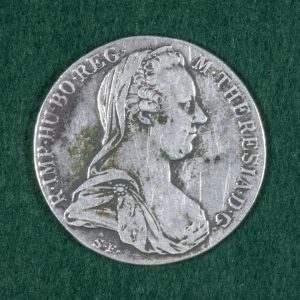
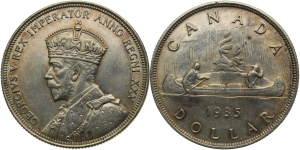
Dutch silver coins span more than four centuries of minting history, from the early Republic guilders of the 1600s to the last silver Rijksdaalders struck under Queen Juliana in 1966. If you’ve come across a Netherlands coin and want to know its silver melt value, visit our Netherlands silver coin melt value calculator for live prices.
A Brief History of Netherlands Silver Coinage
The guilder (gulden) served as the monetary unit of the Netherlands from the 17th century until the introduction of the euro in 2002. Silver guilders were struck through most of this period, with fineness levels shifting over time in response to metal costs and monetary policy.
The earliest guilder system used high-purity silver (.945 fine), a standard maintained through much of the 19th century. In 1898, the Netherlands shifted to .720 fine silver for circulation coins — a fineness that remained standard through the mid-20th century. A second reduction to .640 fine was applied to smaller denominations (the dubbeltje and kwartje) in the early 1900s. Silver was removed entirely from Dutch circulation coins after 1966, when the last Rijksdaalder series was struck.
The key eras for Dutch silver collectors are the Willem II and Willem III reign pieces (1840–1890, .945 fine), the Wilhelmina era (1890–1948, .720 fine), and the Juliana era (1948–1966, .720 fine). Each period produced the same denominations but with subtle design differences and, in some cases, different silver content.
2½ Gulden (Rijksdaalder) — The Crown Jewel of Dutch Silver
The Rijksdaalder — the 2½ gulden coin — is the most collected Dutch silver denomination. Its large size makes it ideal for displaying the monarchs’ portraits, and its substantial silver content gives it strong melt value. Three distinct weight and fineness configurations were produced depending on the era.
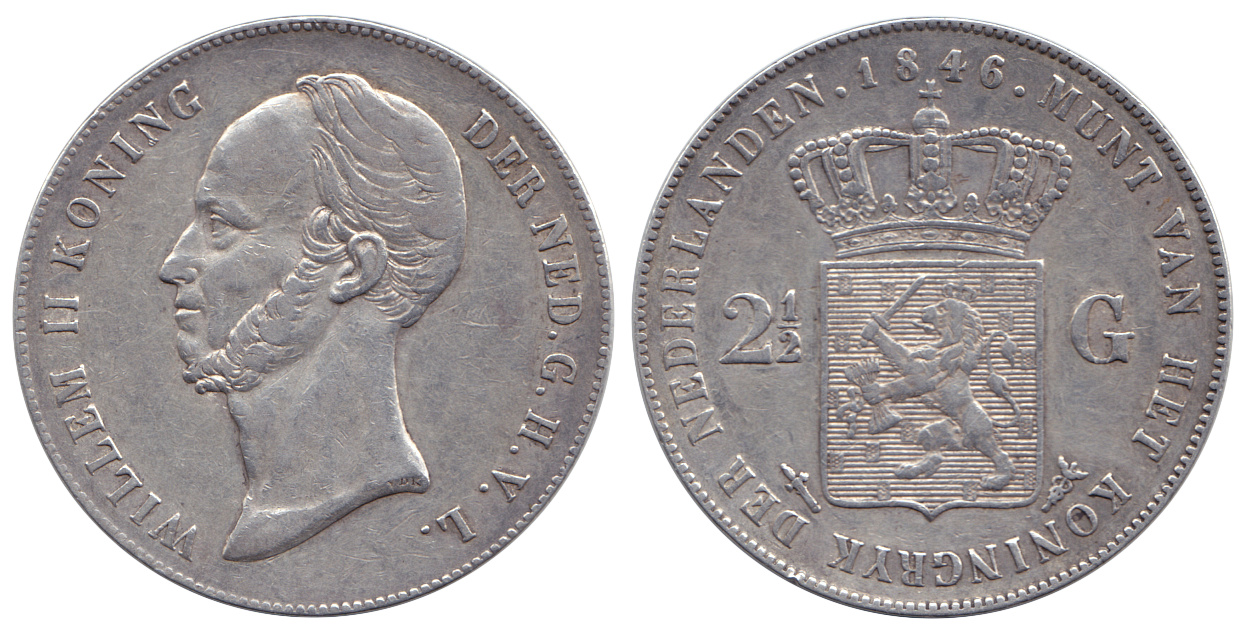
2½ Gulden: Willem II and Willem III Era (1840–1897)
- Weight: 25.0 g
- Fineness: .945
- ASW: 0.7596 troy oz
- Current melt value: 51.46
These are the heavy pre-reform pieces. At nearly ¾ of a troy ounce of silver each, they represent the best melt value in the Dutch silver series. The 1849 Willem II issue and the various Willem III dates (1850–1874 in particular) are the most commonly encountered.
2½ Gulden: Wilhelmina Era (1898–1937)
- Weight: 25.0 g
- Fineness: .720
- ASW: 0.5787 troy oz
- Current melt value: 39.21
The Wilhelmina Rijksdaalders are the most widely available Dutch silver coins in today’s market. Struck from 1898 through 1937 (with gaps during WWI), they circulated heavily and appear in large quantities in European coin markets. No 2½ gulden was struck during World War II.
2½ Gulden: Juliana Era (1959–1966)
- Weight: 15.0 g
- Fineness: .720
- ASW: 0.3472 troy oz
- Current melt value: 23.52
The post-war Rijksdaalder was redesigned as a lighter coin, reducing the weight from 25g to 15g while maintaining the .720 fineness. These were struck from 1959 to 1966 — the last silver coins in regular Dutch circulation. The 1966 date is the final year and sees collector premium above melt.
1 Gulden — The Standard Silver Coin
The 1 gulden coin was the backbone of Dutch silver coinage. It was produced across multiple reigns and two distinct fineness standards.
1 Gulden: Willem II and Willem III Era (1840–1897)
- Weight: 10.735 g
- Fineness: .945
- ASW: 0.3261 troy oz
- Current melt value: 22.09
1 Gulden: Wilhelmina Era (1898–1945)
- Weight: 10.0 g
- Fineness: .720
- ASW: 0.2315 troy oz
- Current melt value: 15.68
1 Gulden: Juliana Era (1954–1967)
- Weight: 6.5 g
- Fineness: .720
- ASW: 0.1505 troy oz
- Current melt value: 10.2
The Juliana 1 gulden (1954–1967) is the most commonly found Dutch silver coin in circulation hoards. Note that the 1 gulden was struck in silver only through 1967 — starting in 1968 the coin was issued in nickel.
25 Cents (Kwartje)
The Dutch 25-cent coin (kwartje) was struck in silver from 1849 through 1940. Two fineness standards apply depending on the reign period.
- 1849–1897 (.945 fine): 3.575 g → ASW 0.1086 oz → Melt: 7.36
- 1910–1940 (.640 fine): 3.575 g → ASW 0.0736 oz → Melt: 4.99
10 Cents (Dubbeltje)
The dubbeltje (10-cent piece) is the smallest commonly encountered Dutch silver coin. It was struck in silver from 1849 through 1944 in two different fineness periods.
- 1849–1897 (.945 fine): 1.40 g → ASW 0.0425 oz → Melt: 2.88
- 1910–1944 (.640 fine): 1.40 g → ASW 0.0288 oz → Melt: 1.95
Netherlands Silver Coin Melt Value Reference Table
All melt values are calculated live from the current silver spot price. Use our Netherlands silver melt calculator to check today’s price for any Dutch coin.
| Denomination | Era / Reign | Weight (g) | Fineness | ASW (troy oz) | Melt Value |
|---|---|---|---|---|---|
| 2½ Gulden (Rijksdaalder) | Willem II–III (1840–1897) | 25.0 | .945 | 0.7596 | 51.46 |
| 2½ Gulden (Rijksdaalder) | Wilhelmina (1898–1937) | 25.0 | .720 | 0.5787 | 39.21 |
| 2½ Gulden (Rijksdaalder) | Juliana (1959–1966) | 15.0 | .720 | 0.3472 | 23.52 |
| 1 Gulden | Willem II–III (1840–1897) | 10.735 | .945 | 0.3261 | 22.09 |
| 1 Gulden | Wilhelmina (1898–1945) | 10.0 | .720 | 0.2315 | 15.68 |
| 1 Gulden | Juliana (1954–1967) | 6.5 | .720 | 0.1505 | 10.2 |
| 25 Cents (Kwartje) | 1849–1897 | 3.575 | .945 | 0.1086 | 7.36 |
| 25 Cents (Kwartje) | 1910–1940 | 3.575 | .640 | 0.0736 | 4.99 |
| 10 Cents (Dubbeltje) | 1849–1897 | 1.40 | .945 | 0.0425 | 2.88 |
| 10 Cents (Dubbeltje) | 1910–1944 | 1.40 | .640 | 0.0288 | 1.95 |
Key Dates and Collector Notes
Most Dutch silver coins trade near melt value in worn circulated grades, but a handful of key dates command meaningful premiums.
For the Rijksdaalder series, the 1929 and 1930 Wilhelmina pieces are scarce due to low mintages, and the 1966 Juliana Rijksdaalder is the last year silver was used for this denomination — it carries a collector premium in uncirculated condition. The 1945 liberation pieces (dated 1945, struck in Canada) are popular due to their wartime-exile backstory.
For the 1 gulden, the Wilhelmina pieces dated 1907–1909 have lower mintages and are harder to find. The 1944 gulden was struck in Philadelphia and San Francisco while the Netherlands was occupied — these are collectible on their own merits beyond melt.
Dutch silver coins are widely available through European coin dealers and at major auction houses. Coins from the Wilhelmina and Juliana eras in particular appear regularly in mixed silver lots and are an easy entry point for new collectors interested in European silver.
What Are Your Netherlands Silver Coins Worth Today?
The melt values in the table above update in real time as silver prices change. For a complete breakdown of every Dutch silver coin denomination with live calculations, visit our Netherlands silver coin melt value calculator — enter your coins and see exactly what they’re worth at today’s silver spot price.