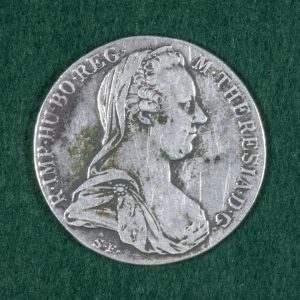
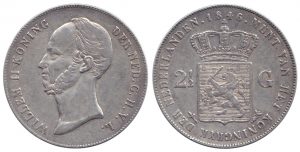
British Maundy Pence, French ¼-Franc, Spanish 20 Centimos & Netherlands 5-Cent Values Guide
Small silver coins are an accessible and rewarding specialty within numismatics. They combine: (1) tangible intrinsic metal value, (2) historical interest, and (3) often modest entry prices for well-preserved specimens. This guide summarizes key issues, rarity drivers, and practical buying recommendations for four popular series. Where precise metal-content math is shown, I’ve included the step-by-step conversions so you can reproduce and verify the math yourself.
Note on methodology and verification: numismatic valuations depend on condition, provenance, market liquidity and up-to-date auction results. Before purchasing a high-value rarity, consult primary references (NGC, PCGS, Standard Catalog/Krause) and request certified, third-party grades when appropriate.
Key takeaways
- British Maundy pence (1d–4d): struck in sterling silver for most of the modern era; the annual Maundy set has strong collector interest and modest intrinsic silver value—premiums are principally numismatic.
- French ¼-franc (Republican issues, AN 12–1848): tiny coins (≈1.5 g total weight) in .900 silver; many low-mintage mint-mark varieties exist and drive prices.
- Netherlands 5-cent “speck” (19th century, .640 fine): very small silver content on a low-fineness planchet—intrinsic value is low, but many date/condition varieties are collectible.
- Spanish 20 céntimos (1869, Amadeo I and early Republic types): a handful of issues are genuinely rare and command four-figure prices in high grades.
- Certification: for scarce varieties (e.g., specific mintmarks, very low mintages), insist on third-party certification (PCGS, NGC) to ensure provenance and grade.
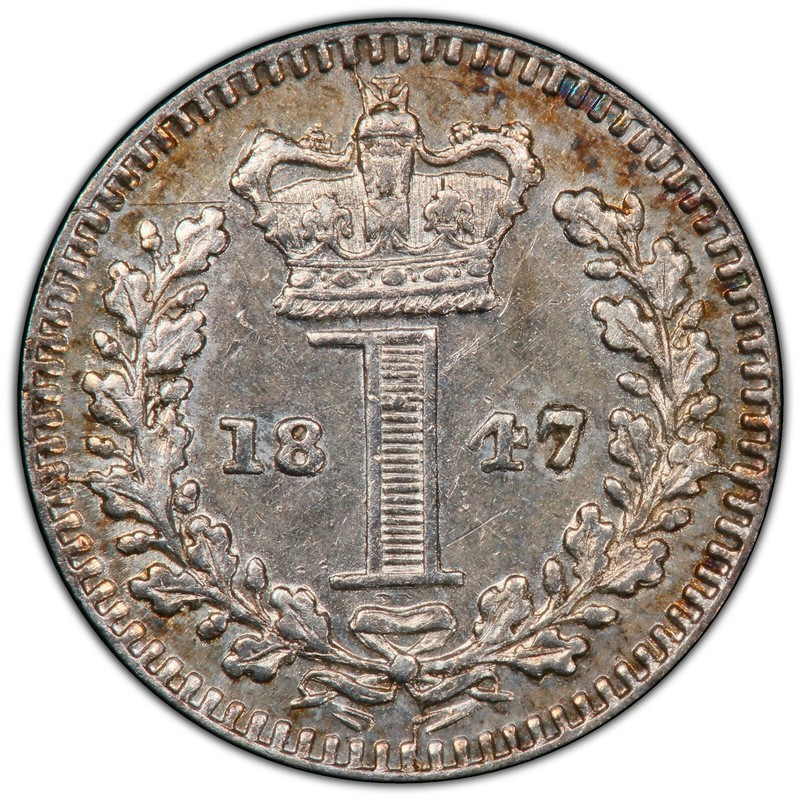
1. British Maundy pence (1d–4d, modern sterling issues)
Overview. Maundy pence are issued annually (Maundy Thursday) as part of a formal royal ceremony. Modern Maundy pence are struck in sterling silver (.925) and are sold/issued only in sets; collectors prize complete year sets and proof issues.
Design & makers. Obverses typically show the reigning sovereign’s portrait (e.g., Mary Gillick portrait for early Elizabeth II coinage; later Ian Rank-Broadley effigy for later Elizabeth II issues). Reverses display royal arms or denominational devices.
Collecting notes.
- Most circulation-quality individual Maundy pence have modest bullion value; premiums reflect scarcity of specific years and condition.
- Proof sets (limited modern mintages) command higher prices.
- Always confirm whether a coin is a presentation or circulation strike and whether it appears within an official Maundy set.
Intrinsic value example (illustrative only).
If a Maundy 4d contains 0.056 troy oz Ag (confirm exact silver mass for the specific year/issue with a reference catalogue), then at a silver spot of $25/oz the bullion content equals:
- Step 1: 0.056 oz × $25/oz = $1.40 intrinsic silver value.
- But numismatic value will usually be several times that for desirable years/grades.
Action: consult The Royal Mint publications or specialist Maundy references for exact weight and fineness by year if you need coin-level silver mass.
Mints and Mintage
| Denomination | Denom. | Mint | Mintage |
|---|---|---|---|
| 1 Pence | 1d | Royal Mint (LM) | 2,000 – 3,000 each |
| 2 Pence | 2d | LM | 2,000 – 3,000 each |
| 3 Pence | 3d | LM | 2,000 – 3,000 each |
| 4 Pence | 4d | LM | 2,000 – 3,000 each |
Collector Values and Auction Records
- Circulated: £20–£40 per piece depending on denomination.
- Uncirculated: £80–£150 each.
- Proof Set: £200–£400 total.
- Record Sale: Proof 4 pence 1986 graded PF 69 by NGC – £780 (2019 auction).
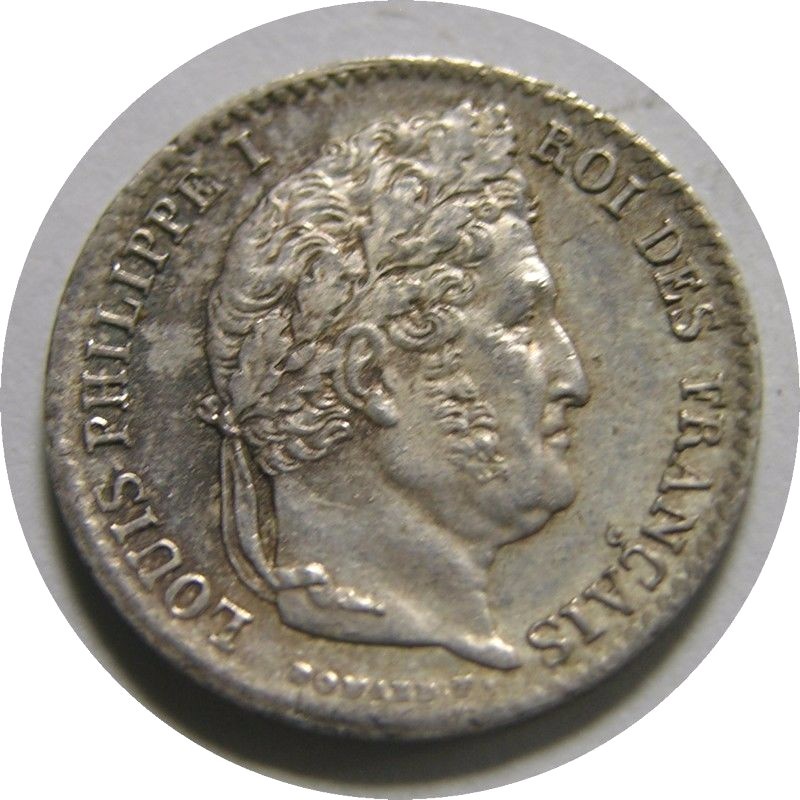
2. French ¼-franc (Republican / early 19th century, AN 12–1848; .900 fine)
Known as the “centime” in earlier Republican issues, these weigh 1.5 g (.0362 oz Ag) in .900 silver. Issued AN 12 (1803)–1848.
Overview. Small Republican fractional coins (often called “centimes” or ¼-franc) were struck on light planchets and exist in a wide array of mintmarks. They are attractive to collectors who study mint-mark and overdate varieties.
Physical data (step-by-step conversion). Many issues weigh 1.5 grams with a .900 silver fineness. To find the troy-ounce silver content and an approximate bullion value:
- Calculate silver mass in grams:
1.5 g × 0.900 = 1.35 g Ag. - Convert grams to troy ounces using 1 troy oz = 31.1034768 g:
1.35 g ÷ 31.1034768 g/troy oz = 0.0434035079 troy oz Ag. - Estimate bullion value at $25/oz:
0.0434035079 oz × $25/oz = $1.0850877 ≈ $1.09 intrinsic silver value.
Mints and Mintage
| Mint | Mintmark | Mintage Range |
|---|---|---|
| Paris | AN12 A – 1848 A | 1,757 – 50,000 |
| Lille | AN12 I – 1833 I | 1,466 – 39,000 |
| Strasbourg | AN12 D – 1834 BB | 100 – 22,000 |
| Toulouse | AN13 T – 1836 T | 2,194 – 18,000 |
Why mintmarks matter. Many mint marks had low mintages (examples: certain provincial mints), which elevates collector values well above intrinsic metal value.
Value Range by Mintmark
| Mint | VF (uncert.) | XF/Unc. | Certified High-Grade |
|---|---|---|---|
| Paris | $50–$80 | $100–$150 | $180–$250 |
| Lille | $60–$90 | $120–$180 | $200–$300 |
| Strasbourg | $200–$400 | $450–$700 | $850–$1,200 |
| Toulouse | $140–$200 | $250–$350 | $400–$550 |
Representative market values (illustrative). Market prices vary by mintmark and grade—some provincial issues in VF or better can sell for several hundred dollars. Top auction records for particularly rare mintmarks or extremely high grades may be substantially higher—verify in auction databases (CoinArchives) or the Standard Catalog.
3. Netherlands 5-cent (“speck”) (mid-19th century, .640 fine)
Overview. The small Dutch 5-cent issues circulated into the late 19th century on a relatively low-fineness silver planchet (.640). They are traditionally called “silver specks” for their small size and low silver content.
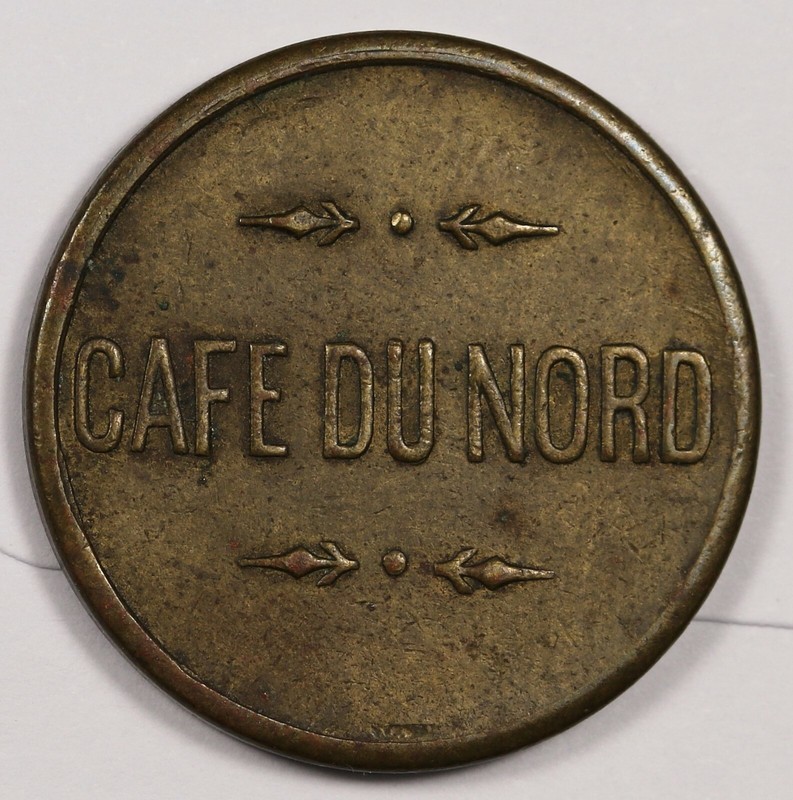
Physical data (step-by-step conversion example for a 1 g planchet). If the coin mass is 1.00 g and fineness is .640:
- Silver mass in grams: 1.00 g × 0.640 = 0.64 g Ag.
- Convert to troy ounces: 0.64 g ÷ 31.1034768 g/troy oz = 0.0205764778 troy oz Ag.
- Bullion value at $25/oz: 0.0205764778 oz × $25/oz = $0.5144119 ≈ $0.51 intrinsic silver value.
Mints & Mintage
| Year | Mintage |
|---|---|
| 1848 | 1,200,000 |
| 1870 | 2,400,000 |
| 1887 | 5,000,000 |
Collecting value. Even though the bullion content is low, collectors prize date/condition rarities and complete sets. Typical market prices are modest for common dates but increase for superior grades and scarce years.
4. Spanish 20 céntimos (1869 Amadeo I / early Republic types)
Overview & rarity. Certain 20-céntimo issues of 1869 (Amadeo I and transitional pieces) are rare and can command four-figure prices in high grade. When mintage figures are unusually low, provenance and certification become critical.
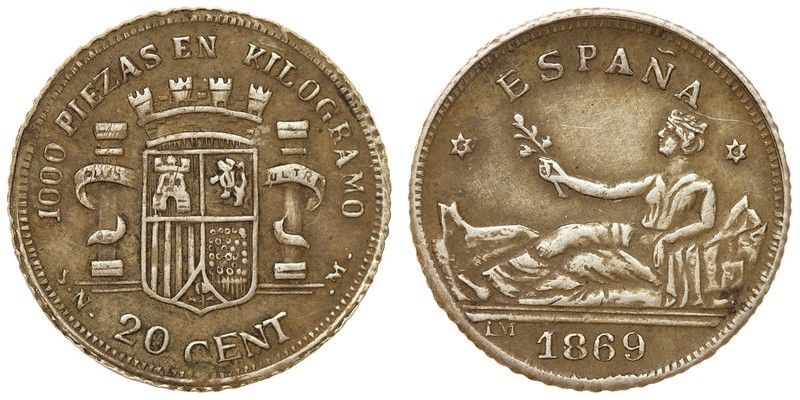
Market guidance.
- For high-value Spanish small-denomination rarities, insist on third-party certification (PCGS/NGC) and request lot histories or auction provenance.
- Smaller varieties and condition changes (e.g., prooflike surfaces, strong strikes) can produce significant premiums over intrinsic metal content.
Mints & Mintage
| Mintmark | Location | Mintage |
|---|---|---|
| 4 | Madrid | 91 |
| 0 | Barcelona (1870) | 5,000 |
Intrinsic value. Many rare Spanish small denominations have modest silver content (a few hundredths of an ounce), but their collector premiums dominate their market price.
Practical buying and authentication checklist (for all four series)
- Use authoritative catalogs. Cross-check varieties and mintage figures in the Standard Catalog of World Coins (Krause) and specialist country catalogs. Use PCGS/NGC population reports for rarity context.
- Prioritize certification for rarities. For low-mintage, high-value items, buy only certified examples or have the coin independently graded. Certification supports provenance, grade reliability, and easier resale.
- Verify silver weights and fineness. If intrinsic value matters for your strategy, confirm the weight and fineness in a reliable reference rather than assuming values. For small fragile planchets, published mint tables are the authoritative source.
- Compare auction records. Use CoinArchives, Heritage/Stack’s Bowers, and other auction houses to establish realized prices for matching grade and variety.
- Beware of cleaned or altered pieces. Small silver coins are often cleaned, trimmed, or repaired—these defects can materially reduce market value even when visually appealing.
- Consider storage & insurance. For valuable specimens, use secure insured storage and maintain documentation (certificates, invoices, photodocumentation of serials if applicable).
Sources and further reading
- NGC (Numismatic Guaranty Corporation) — population reports and grading guides.
- PCGS (Professional Coin Grading Service) — census/population and attribution guides.
- Krause, Chester L. & Clifford Mishler — Standard Catalog of World Coins (best for mintages, weights and varieties).
- CoinArchives / major auction houses (Heritage, Stack’s Bowers) — realized auction prices and provenance.
- The Royal Mint / British Numismatic Society — Maundy set history and official releases.
- Specialist monographs on French Republican coinage and Spanish 19th-century issues (consult academic numismatic libraries and journal articles for deep research).
Closing notes
Small silver coins are an intellectually rich collecting field with many opportunities for discovery at modest cost. However, the true value of these pieces lies in correct identification, accurate grading, and provenance. When pursing the rarities discussed above, do not rely on a single source: confirm metal content and variety in reference catalogs, obtain third-party certification where value justifies it, and consult auction records to form realistic price expectations.
This guide is informational and educational, not financial advice. For investment decisions or tax considerations, consult a qualified financial advisor, tax professional or professional numismatist.